

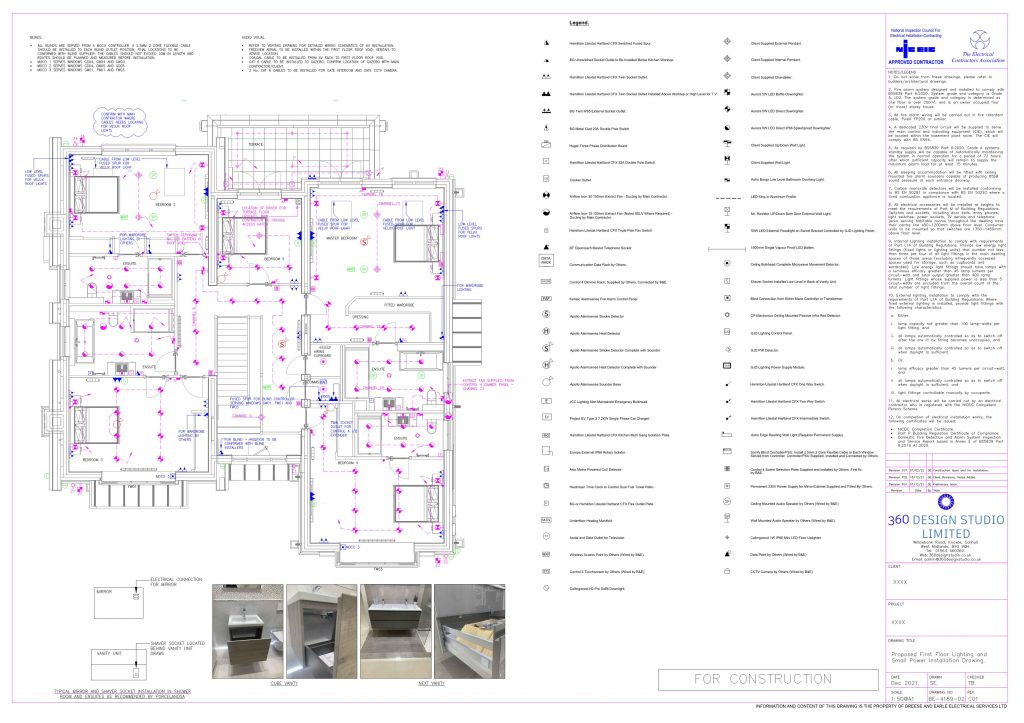
Electrical drawings are crucial for construction projects for several reasons:
- Clarity and Understanding: Electrical drawings provide a clear representation of the electrical system planned for the construction project. They help everyone involved, from architects to electricians, understand the layout, specifications, and requirements of the electrical components.
- Coordination: Electrical drawings allow for better coordination between different trades and disciplines involved in the construction process. They help ensure that electrical systems are properly integrated with other building elements, such as plumbing, HVAC, and structural components, avoiding conflicts and rework.
- Compliance and Safety: Electrical drawings are typically based on building codes and standards, ensuring that the electrical system meets regulatory requirements. This helps maintain safety standards and reduces the risk of accidents, electrical faults, and non-compliance issues during and after construction.
- Cost Estimation: Accurate electrical drawings enable more precise cost estimation for the electrical work, helping project stakeholders budget effectively and avoid unexpected expenses or delays due to changes or rework.
- Documentation and Maintenance: Electrical drawings serve as valuable documentation for the installed electrical system. They provide a reference for future maintenance, repairs, renovations, or expansions, helping ensure that the electrical infrastructure remains functional and compliant over time.
- Efficiency and Productivity: Having detailed electrical drawings streamlines the construction process, reducing ambiguity and confusion among workers. This can lead to improved efficiency, productivity, and overall project success.
Overall, electrical drawings play a crucial role in ensuring that the electrical aspects of a construction project are well-planned, executed effectively, and compliant with relevant regulations, ultimately contributing to the safety, functionality, and longevity of the built environment.